
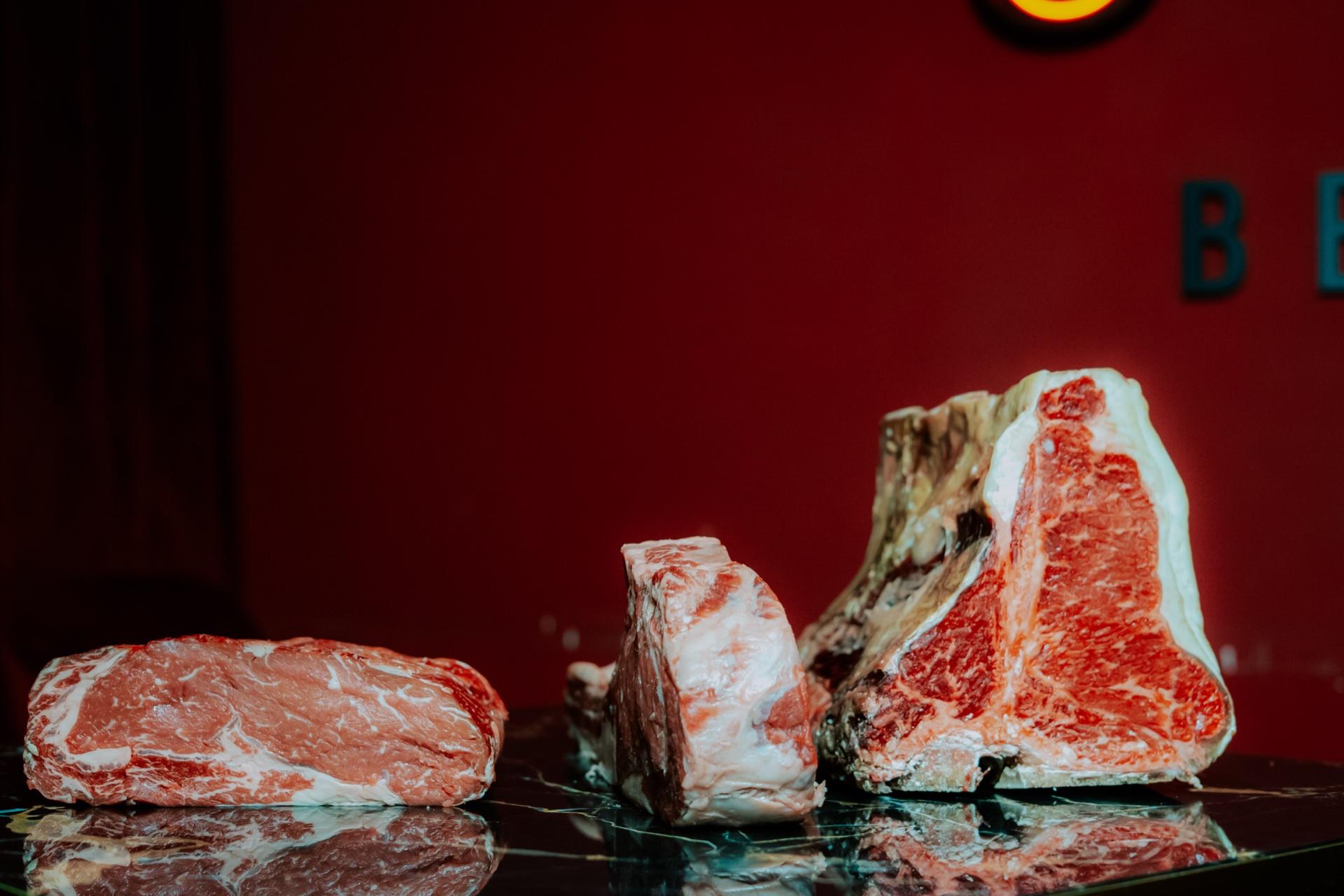
The quinto quarto, the "fifth quarter", is the offal: the internal organs of a slaughtered animal that are neither muscle nor bone. In Rome the term is tied to the Testaccio slaughterhouse, where part of the workers' pay was given in exactly these cuts. From that habit came trattorias and recipes that are now part of Roman cooking.
What the four quarters are, and what the fifth is
In butchery a slaughtered animal is divided into two halves, and each half into a front quarter and a hind quarter: the four quarters, the cuts that go to the butcher and then to plates and grills. The fifth is what is left out of that division. That is why it has the name: it is not an extra piece of meat, it is everything that does not fall within the four.
What does it include, in practice? Sweetbreads, brain, heart, liver, tongue, spleen, lung, kidney and tripe. For poultry the word is giblets. Heart, liver, spleen and lung together are called coratella, a name you hear often in Rome. They are very different ingredients: in texture, flavour and way of cooking they have little in common apart from where they come from.
Why it used to be waste
It sounds strange today, but for a long time offal was treated as waste. The reason is practical: some of these parts, brain in particular, spoil quickly, and before refrigeration existed keeping them was a problem. They were often thrown away at the slaughterhouse straight after slaughter.
Parts that spoiled quickly and that nobody wanted to keep had a low value, and a low value means ingredients that can be handed over cheaply. That is where the cooking of the quinto quarto starts.
The Testaccio slaughterhouse
Testaccio is a district of Rome, and its slaughterhouse was built in the late nineteenth century. Construction took place between 1888 and 1891, to a design by the architect Gioacchino Ersoch, who was commissioned in 1888, with the contribution of the engineer Filippo Laccetti, who devised a system for disposing of organic waste into the nearby Tiber.
In 1975 the slaughterhouse was closed. Rome had reached three million inhabitants, and the structure was replaced by a new one on viale Palmiro Togliatti, in Tor Sapienza. Since then the Testaccio building no longer processes meat, but its name has stayed tied to a way of eating.
The workers and the trattorias
The link with the quinto quarto is this. In Rome offal was part of the pay of the workers at the Testaccio slaughterhouse. Nearby there were small trattorias that received it, cooked it and sold it cheaply to the workers, who ate in the early afternoon.
It is a simple economy, and it explains well how a cuisine begins: from what is available, from who brings it and from who is hungry.
Words worth knowing
A little vocabulary helps, because the same set of cuts has several names. Offal is the commonest word for the internal organs other than muscle and bone. Giblets is the word for poultry. Coratella is the group made up of heart, liver, spleen and lung. Tripe is the stomach of cattle. Sweetbreads, tongue and kidney are names of single parts, and you will see them written like that, with no further explanation, on many menus.
Why people still talk about it
The slaughterhouse is gone, and the problem of keeping the meat has been solved by refrigeration. Even so, the restaurants of Testaccio still serve dishes from the tradition tied to the quinto quarto. That happens because a cuisine born of necessity has turned into a choice: people who order those dishes today do it out of curiosity, habit or respect for a history.
There is a simpler reason too. Cooking well a part that is not a noble cut takes knowledge: timing, fats, balance of flavours. A well-made quinto quarto dish shows, and for people who work with meat it is a way of proving they know the whole animal.
What it means for someone who eats meat today
The quinto quarto reminds us of something useful to anyone who likes meat: an animal is made of many parts, and those that reach the restaurant table are a selection. When you read a name on a menu that you do not know, it is worth asking which part it is, how it is cooked and what to expect. There are many words for the categories of meat, and we tried to explain some of them when we wrote about the words on the label.
Visitors to Rome can also use this key to read the city. Via Veneto, whose history we have told, is the Rome of cafés and film stars. Testaccio is another Rome, the Rome of work and trattorias, and to understand it you have to eat as its inhabitants did.
How to go about it if you want to try
If you have never tasted offal, the advice is not to pick blindly from a menu. Ask in the dining room which part of the animal it is, how it is cooked and whether it suits someone starting out. Then decide. Some parts have a strong flavour, others are milder, and the way they are prepared changes the result a great deal.
If you have food allergies or intolerances, ask for the dish's ingredients, as always. On our website, in the menu, you can see beforehand how the dishes are presented.
Book at Carpaccio Beef Restaurant
We are at Via Marche 9, on the corner of Via Sicilia, a short walk from Via Veneto. Book with the "Prenota" button on the website, on TheFork, or by phone at +39 06 86218298.