
Via Veneto is the street that climbs from Piazza Barberini to Porta Pinciana, in Rome. It was laid out at the end of the nineteenth century on the grounds of Villa Ludovisi, took its present name in 1919 to remember the battle of Vittorio Veneto, and in the 1950s became the street of cafés, photographers and film stars. Today it is a street of hotels, embassies and restaurants, and it still holds two seventeenth-century sights.
From Villa Ludovisi to a street
The land Via Veneto runs through was once Villa Ludovisi. When the city grew, at the end of the nineteenth century, the area was built over and the street was drawn along the slope joining Piazza Barberini to Porta Pinciana, one of the gates in the city walls. The route is still the same: a long bend uphill.
The first name was not today's. The street was named after the Veneto region, like other streets in the district.
Why it is called Via Vittorio Veneto
After the First World War the street changed its name. By resolution no. 37 of the city council, dated 25 October 1919, it was named after the battle of Vittorio Veneto, the last one before the Italian victory. The official name is therefore Via Vittorio Veneto. "Via Veneto" is the form everyone uses, Romans and visitors alike, and it is the one you will see on satnav screens and in searches.
The cafés and the hotels
The fame of Via Veneto does not come from the battle but from its venues. Along the street there were cafés such as Doney and Café de Paris, the latter closed in 2008, and luxury hotels such as the Excelsior. It was the place frequented by actors, singers, journalists and photographers.
That fame has a precise year. In 1960 Federico Fellini's La dolce vita came out, premiered in Rome on 3 February that year at the Fiamma cinema. The film portrayed a Rome of nights, nightclubs and photographers, and Via Veneto was at its centre. It won the Palme d'Or at the 1960 Cannes Film Festival.
The street that was not filmed on Via Veneto
One detail surprises anyone who watches the film today. The Via Veneto scenes were shot at Cinecittà, not in the street. Filming began in the studios on 16 March 1959 and ended in August, and the street was rebuilt on Stage 5. The Via Veneto of the film, born in a studio, is the one the world saw on screen.
The film also gave us a word. One of its characters, the photographer Coriolano Paparazzo, was inspired by the Roman photojournalist Tazio Secchiaroli. His surname became, in many languages, the common noun for people who chase famous faces with a camera: paparazzo.
From filming to the premiere
The dates of the film help put the story in order. Fellini began shooting at Cinecittà on 16 March 1959 and finished in August of the same year. The Rome premiere was an invitation-only gala at the Fiamma cinema on 3 February 1960, followed two days later, on 5 February, by the Milan premiere at the Capitol. A few months after that came the Palme d'Or at Cannes, at the thirteenth festival.
The rebuilt street had a second life. The same set was reused in 1961 for another film, "Totò, Peppino e... la dolce vita", which with its title already poked fun at Fellini's masterpiece. When a street becomes so recognisable that it is imitated a year later, it has stopped being only an address and has entered the common imagination.
What you can see today
Walking along Via Veneto today, you find nineteenth- and twentieth-century buildings, hotels and a few embassies. Palazzo Margherita houses the embassy of the United States. Café de Paris is gone. A plaque dedicated to Fellini recalls the link with the film.
At the bottom, near Piazza Barberini, there are two seventeenth-century places. One is the Fontana delle Api. The church of Santa Maria Immacolata holds the Capuchin crypt. They are two stops that fit well into a walk up the slope, before you reach Porta Pinciana and the walls at the top.
On the other side of the gate lies Villa Borghese, and that is a good reason to do the climb the other way round: start from the park, walk down the street and stop halfway for a break.
A walk, from the top or from the bottom
If you want to do Via Veneto in some order, you can follow the places we have described in the order you meet them going uphill. Start at Piazza Barberini. Soon after you find the Fontana delle Api and, close by, the church of Santa Maria Immacolata with the Capuchin crypt. Going up you pass the hotels and Palazzo Margherita, home of the US embassy. At the top is Porta Pinciana, and beyond the gate, Villa Borghese.
You can also do it in reverse, which has the advantage of being downhill. From the park you pass under the gate and walk down the street to Piazza Barberini. Either way it pays not to hurry: the street is understood by looking at the facades and the details, not by crossing it.
How to get there
The nearest metro stop is Barberini, on line A, at Piazza Barberini, where the street starts to climb. If you arrive by car, check the access rules for the historic centre beforehand.
A break a few steps from Via Veneto
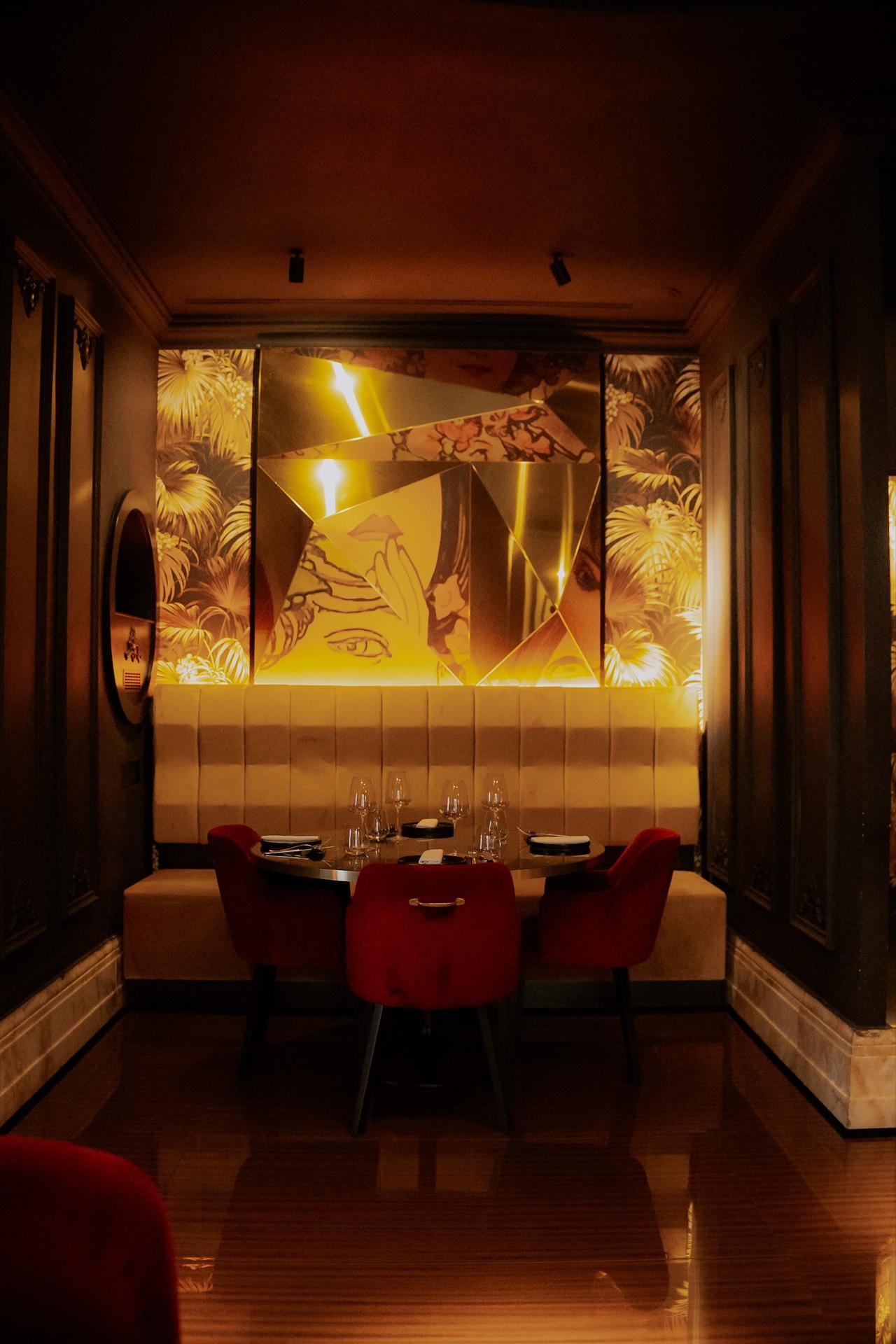
Our restaurant, Carpaccio Beef Restaurant, is at Via Marche 9, on the corner of Via Sicilia, a short walk from Via Veneto. You can read about the restaurant and look at the menu. Book with the "Prenota" button on the website, on TheFork, or by phone at +39 06 86218298.