
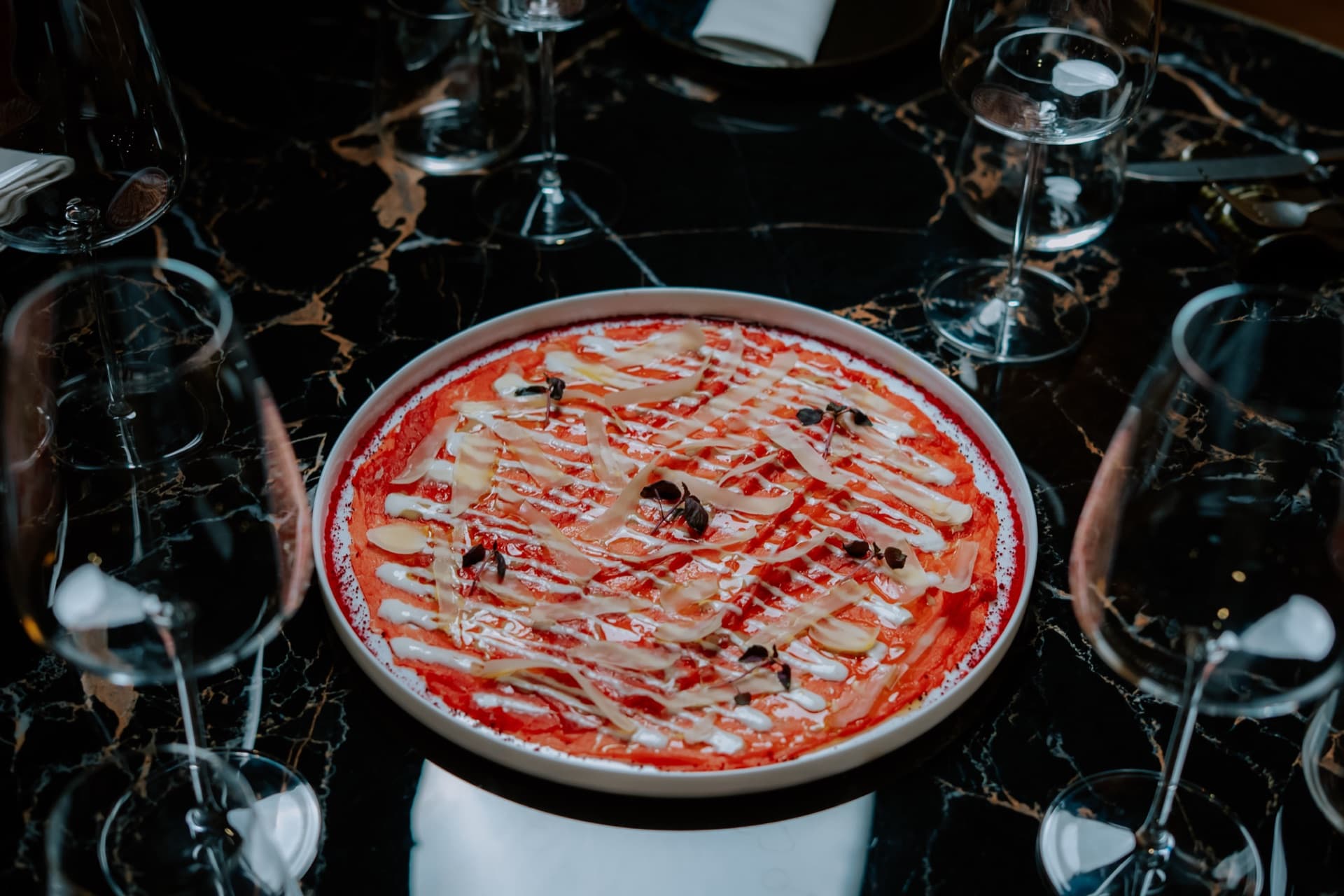
Beef carpaccio is raw beef, cut into very thin slices and dressed at the last moment. With a lean cut, a sharp knife and a few ingredients, the dish takes minutes to prepare. Three choices made beforehand decide whether it is good or just raw: which piece to buy, how to slice it and what to dress it with.
Which cut to use
The classic recipe starts from the controfiletto, the strip loin, a lean and compact cut. It works because it has little connective tissue and little hard fat. In a slice a few millimetres thick, a sinew or a tough membrane is felt at once under the teeth, and there is no cooking here to soften them.
For the same reason not every piece of beef will do. Cuts meant for long cooking, rich in connective tissue, need heat and time to become tender, and raw they stay rubbery. When someone says carpaccio is "tough", the problem is usually the cut chosen and how well the piece was trimmed, not the slicing. We wrote about how texture and juice change with heat when we looked at steak doneness. With carpaccio the heat is missing, and everything depends on choosing the right piece.
The meat must be very fresh
Carpaccio is unforgiving. The recipe says it plainly: very fresh meat, never thawed. When you eat a raw piece you cannot fix anything with fire, so everything depends on where the meat comes from and how it was kept. The piece stays cold until the moment it is sliced, is trimmed of the parts you do not eat, and is sliced only when needed. There is no reason to prepare plates in advance and leave them on the counter.
At home, buy the piece the same day, keep it in the fridge until the last minute and slice it with clean hands and tools. If you have a condition that calls for caution (pregnancy, a weak immune system, small children), ask your doctor whether raw meat should be avoided.
How to slice it
In the classic version the meat is sliced by hand, with a knife, into very thin slices. The piece must be well chilled, because cold meat is firmer and cuts cleanly, and the knife edge must be perfect: with a dull blade the meat tears instead of cutting.
The direction matters. You cut across the grain, perpendicular to the fibres you can see running along the piece. Short fibres make the slice softer in the mouth. Cut along the grain, the same slice turns stringy.
Then there is thickness and layout. The slices go on the plate without overlapping, in a single layer, with a little empty space in the middle and at the edges. A slice as thin as a veil carries an intense flavour with very little dressing, and you can see it in the translucency: if you can half see the plate, the thickness is right.
The classic dressing
The simplest dressing is salt and pepper on the slices, then olive oil, a few drops of lemon and, if you like, shavings of grana or parmigiano. Salt goes on the plate, and it helps to wait a few minutes for the meat to take it up, but not too long: raw meat salted for a long time changes appearance and texture. In general the dressing goes on shortly before serving.
The lemon deserves a note. Acid lightens the meat and, if it stays in contact for long, cooks the surface and turns it opaque. A few drops as the plate goes to the table give freshness without changing the colour. If you see a grey, damp carpaccio, it was probably dressed too early.
There is also the Cipriani universal sauce, named after Giuseppe Cipriani, of Harry's Bar in Venice, where the dish was born. It is a mayonnaise base with cream, mustard, Worcestershire sauce and brandy. It is a dressing of its own: it covers the flavour of the meat a little more and suits those who prefer a full, creamy taste.
The most common mistakes at home
The meat is too thick. Carpaccio is not a raw steak: if the slice is thick, the centre is rubbery and the dish becomes heavy.
The piece is trimmed too clean of fat or, the opposite, carries too much. The strip loin has an edge of fat that must come off before slicing, because raw it does not melt.
The knife does not cut. Slicing a cold piece with a blunt blade is the quickest way to get uneven, torn slices.
The dressing goes on too early. Salt, lemon and oil added well in advance change the colour and the structure of the meat. You see it straight away: the slice loses its bright red and turns damp.
The plate sits outside the fridge. A dressed carpaccio left on the table for an hour is a carpaccio you would not want to eat.
What to expect at a restaurant
When you order carpaccio in a steakhouse, there are a few things you can notice without asking. The slices should be even and almost translucent, the colour bright and uniform red, the surface glossy but not wet. The dressing should sit on top, not underneath, and be light. And the plate should arrive cold, but not frozen.
If you have doubts about an ingredient, ask. In the dining room they will answer about the dressing, the meat and allergens, which are also listed in the online menu.
Book at Carpaccio Beef Restaurant
We are at Via Marche 9, on the corner of Via Sicilia, a short walk from Via Veneto. Book with the "Prenota" button on the website, on TheFork, or by phone at +39 06 86218298.